
Plenary Lecture Ⅰ | July 5th (Sunday) 10:30–11:30 Room A
Title
Digital Twin to Digital Triplet
- Tips and Tricks of Machine Learning, Integrating Experiment, CFD through Additive Manufacturing
Lecturer
Masahiro Furuya,
Cooperative Major in Nuclear Energy
Graduate School of Advanced Science and Engineering
Waseda University
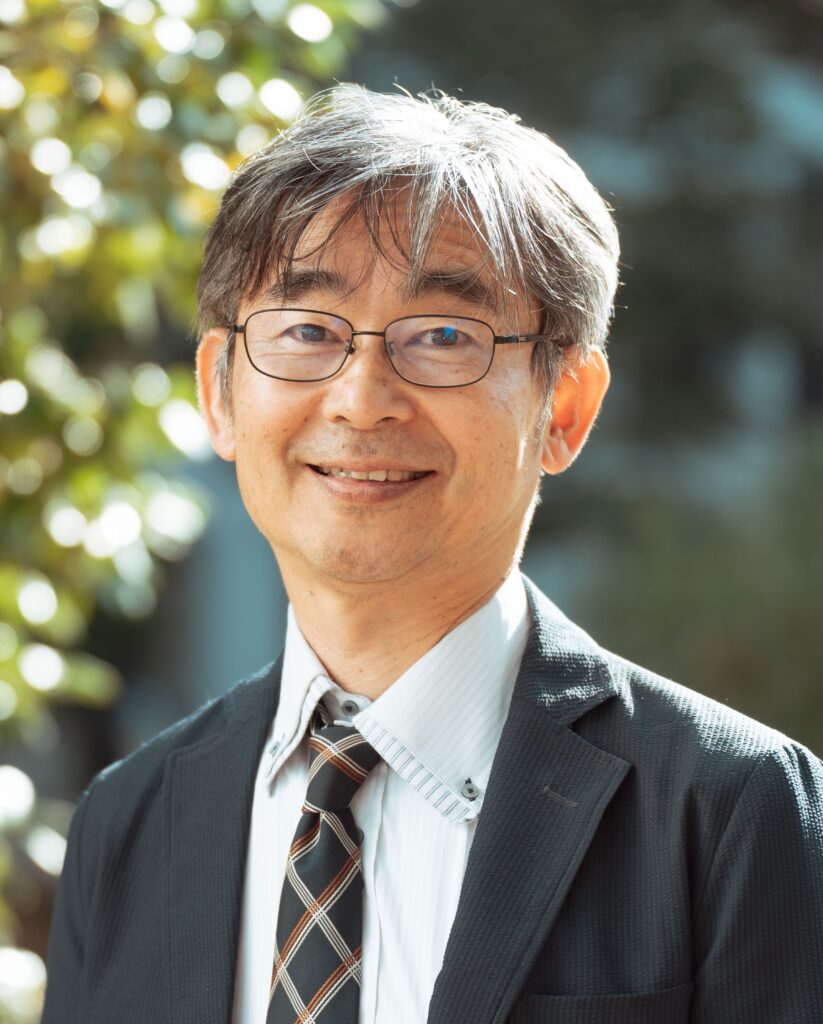
Masahiro Furuya is a professor at Waseda University. He has also been a deputy associate vice president at Energy Transformation Research Laboratory in Central Research Institute of Electric Power Industry (CRIEPI). He received a Ph.D. from Delft University of Technology in the Netherlands in 2006. He started his research career at Argonne National Laboratory in 1992 as a visiting researcher. His research focuses on thermal-hydraulics, multiphase flow, electrochemistry, photocatalysis, and powder production. His engineering fields are fusion and nuclear reactor engineering, as well as chemical and bioengineering.
Summary
Rotating machinery operates at the confluence of complex transport phenomena—multiphase flow, heat transfer, cavitation, and fluid–structure interaction—where experimental observation, high-fidelity CFD, and data-driven modeling must work in concert to advance design and reliability. This lecture introduces the "Digital Triplet" framework, a unified research strategy that integrates experimental measurement, CFD, and machine learning, and examines its relevance to the transport phenomena and rotating machinery community.
The lecture begins with a reconceptualization of the digital twin: rather than a purely virtual replica of a physical system, the speaker proposes its inverse—a physical replica of numerical simulation, realized through additive manufacturing. Scaled, sensor-integrated experimental hardware fabricated via 3D printing enables the co-design of complex internal geometries, embedded measurement and control systems, and similarity-based scaling with simulation, opening new possibilities for instrumented impellers, flow channels, and rotor-stator configurations in rotating machinery research. Building on this foundation, the talk surveys machine-learning applications developed for thermal-fluid systems, including semantic segmentation of boiling two-phase flow, transfer learning for ultrasonic diagnostic imaging, and CNN-based analysis of CFD flow scenes. A central focus is explainable AI: using methods such as LIME to visualize how neural networks
Plenary Lecture Ⅱ | July 5th (Sunday) 14:30–15:30 Room A
Title
Challenge of Multi-Physics CFD Simulation in Jet Engines
Lecturer
Makoto Yamamoto,
Physics Laboratory for Mechanical Engineering,
Waseda University
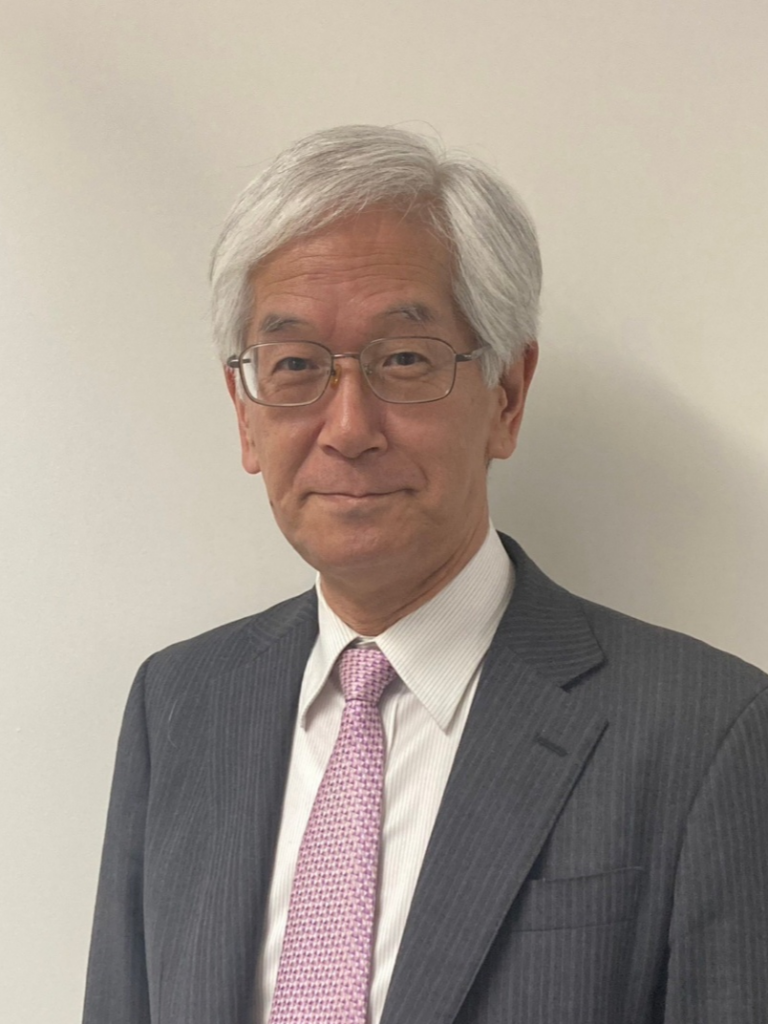
Dr. Makoto Yamamoto completed the doctoral coursework at the University of Tokyo, Graduate School of Engineering in 1987 and received his Doctor of Engineering degree in 1988. From 1987 to 1990, he worked in the aerodynamic design and development of jet engines at Ishikawajima-Harima Heavy Industries Co., Ltd (now IHI). From 1990 to 2026, he worked at the Faculty of Engineering, Tokyo University of Science. He became a professor in 2004 and served as vice president from 2014 to 2018. He has been a professor at Waseda University since April 2026. During this time, he served as president of the Japan Society of Mechanical Engineers, the Gas Turbine Society of Japan, the Japan Society of Fluid Mechanics, and the International Association for Exchange of Students for Technical Experience. In April 2026, he became an Honorary Member of the Japan Society of Mechanical Engineers.
Summary
Jet engines operate while ingesting large amounts of tiny solid particles, liquid droplets, and ice chunks suspended in the atmosphere. These tiny particles cause various multi-physics phenomena inside the jet engines, such as erosion, deposition, and icing, posing a serious risk to the aerodynamic performance, safety, maintenance, and lifespan of the jet engine. The present speech will introduce the numerical methods and representative computational results of multi-physics CFD simulations, using deposition and icing as examples.
Jet engines are frequently exposed to harsh environments containing dust particles such as sand or volcanic ash, which can be solved in the combustion chamber due to the high temperature, and adhere to turbine vane surfaces or internal cooling channels. This phenomenon is referred to as “deposition”. The deposition phenomenon can lead to adverse effects on the engine performance, including aerodynamic degradation and blockage of cooling holes.
Numerous supercooled droplets and/or ice crystals exist in a cloud. When an aircraft passes through a cloud, they impinge on the aircraft wing and fuselage, and also they enter into the jet engines. Such impinging droplets and ice crystals can form ice layers on the surfaces. This phenomenon is referred to as “icing”. Apparently, the icing adversely affects the performance of an aircraft by reducing the lift and thrust, and it may cause a crash. Four types of icing are important in engineering: rime icing, glaze icing, supercooled large droplet (SLD) icing, and ice crystal icing.
In our simulation code, the Euler-Lagrange method is employed, assuming one-way coupling. The temporal progression of the phenomenon is simulated by performing multi-shot computations, which involve repeating a series of computational processes: flow field computation, trajectory computation of minute particles, thermodynamic computation, and grid regeneration. In the flow field computation, the turbulent flow is modeled by the Reynolds-Averaged Navier-Stokes equations (RANS) because of the short computational time.
I hope this speech will provide useful insights for future research and development of the participants.
Plenary Lecture Ⅲ | July 6th (Monday) 9:30–10:30 Room A
Title
Quantitative Flow Visualization of Gas Turbine Blade Internal Cooling Flows utilizing Magnetic Resonance Velocimetry
Lecturer
Wontae Hwang,
Mechanical Engineering Department
Seoul National University
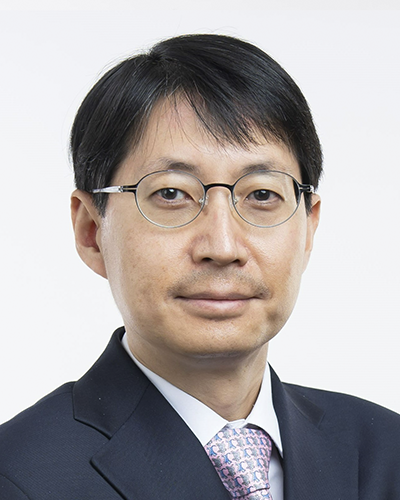
Prof. Wontae Hwang joined the Mechanical Engineering Dept. at Seoul National University (SNU) in 2016. He currently serves as the Vice Dean of International Affairs at the College of Engineering, and is Vice President of the Korean Society of Fluid Machinery, Korean Society of Mechanical Engineers Fluid Engineering Division, and Korean Society of Visualization. His research areas focus on aerodynamics and heat transfer within gas turbines, interaction of particles and droplets with turbulent flows, and high-speed rarified flows. He specializes in experimental techniques such as MRI flow imaging, infrared thermography, and laser/optical diagnostics. Before joining SNU, Prof. Hwang was at GE Research for 8 years and Sandia National Laboratories for 3 years. He obtained his Ph.D. at Stanford University in 2005, and B.S. at Seoul National University in 1997.
Summary
Jet engines and gas turbines operate at extremely high temperatures in order to increase thermodynamic efficiency. The hot flow passing by the turbine blades are well over the melting point of the metal material. Thus, substantial internal and external cooling of the blades is imperative to maintain sufficient blade life.
This talk focuses on the use of medical MRI scanners to qualitatively visualize and quantitatively analyze turbine blade internal cooling flows. Magnetic Resonance Velocimetry (MRV) is a technique that allows for non-intrusive 3D visualization of complex flow structures. Several million velocity vectors can be obtained within a few hours, without the need for any optical access or flow tracers. Thus, this technique can be utilized for quantitative validation of computational fluid dynamics (CFD) simulations.
I will first explain the basic principles behind this novel technique. Next, I will discuss the usage of MRV to assess the complex flow structures within gas turbine blade serpentine cooling passages, trailing edge channels, and lattice cooling structures. I will also illustrate how this relates to actual heat transfer measurements. This technology has been used in the development of gas turbines for power generation and also advanced aircraft engines.
Plenary Lecture Ⅳ | July 6th (Monday) 14:00–15:00 Room A
Title
Overcoming the AI Data Bottleneck in Turbomachinery: Physics-Enhanced Machine Learning via 3D Inverse Design
Lecturer
Mehrdad Zangeneh,
Department of Mechanical Engineering,
University college London

Mehrdad Zangeneh is Professor of Thermofluids at University College London and Founding Director of Advanced Design Technology, Ltd. For the past 30 years he has been involved in development of advanced turbomachinery design codes based on 3D inverse design approach and automatic optimization. His research has resulted in important breakthroughs in radial turbomachinery, such as the suppression of secondary flows in radial and mixed flow impellers and the suppression of corner separation in vaned-diffusers. He is recipient of Japan’s Turbomachinery Society’s Gold Medal, the IMechE Donald Julius Grone Prize and the ASME Henry Worthington medal.
Summary
The integration of machine learning (ML) and data-driven surrogate models into turbomachinery design optimization promises near-instantaneous performance evaluation. However, traditional workflows face a critical "data bottleneck": training high-accuracy deep learning models typically requires thousands of expensive CFD simulations. This computational penalty is severely worsened by conventional CAD-based or geometric parameterizations, which move vertices blindly and generate physically impractical shapes, wasting massive compute resources. Furthermore, pure "black-box" ML models frequently fail to generalize when predicting highly non-linear flow phenomena, such as transonic shocks, boundary layer separation, and complex secondary flows.
This lecture presents a paradigm shift that overcomes this data bottleneck by utilizing 3D Inverse Design as a foundational, physics-guaranteed filter for machine learning. Rather than manipulating raw geometric coordinates, the inverse method uses aerodynamic design parameters—specifically, blade loading and circulation distributions—to directly generate the 3D geometry. Because the underlying mathematical framework ensures that every generated shape satisfies specified work and mass flow targets, the design space is constrained entirely to physically valid configurations from the outset.
This "physics-clean" data generation approach yields a 10x to 100x increase in data efficiency, enabling the training of high-accuracy machine learning surrogates . The efficiency of the process can be further enhanced through improvements in machine learning algorithm, such as the Reactive Response Surface (RRS). The lecture will demonstrate the efficacy of this method through practical multi-point optimization cases of high-performance centrifugal compressors, Francis turbine rotor and axial fan. Finally, we will explore how this physics-grounded approach can be used to create high fidelity machine learning expert systems that can be used under industrial conditions by using an example of a mixed flow pump stage.
Plenary Lecture Ⅴ | July 7th (Tuesday) 9:30–10:30 Room A
Title
Hydrogen Landscape in Japan and JH2A Activities
Lecturer
Kenichiro SAITOH,
Deputy Executive Director / General Manager of Project Department,
Japan Hydrogen Association (JH2A)
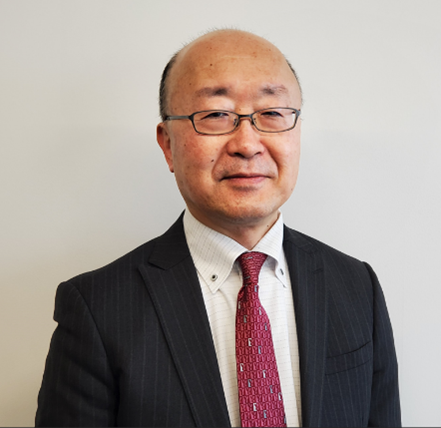
Kenichiro SAITOH is Deputy Executive Director and General Manager of the Project Department at the Japan Hydrogen Association (JH2A). He graduated from the Faculty of Engineering at The University of Tokyo in 1981 and joined Mitsubishi Oil Co., Ltd. in the same year. During more than 40 years in Japan’s energy industry, he held a number of senior research, technology, and management positions, including Executive Officer of ENEOS Research Institute.
Saitoh has made significant contributions to the advancement of hydrogen and energy technologies in Japan. He also served as Professor at the Advanced Energy System for Sustainability (AES) International Research Center of Tokyo Institute of Technology. In addition, he has held leadership roles in major energy and hydrogen-related organizations, including HySUT, the Japan Institute of Energy (JIE), the Hydrogen Energy Systems Society of Japan (HESS), and the Japan Automobile Research Institute (JARI). Since joining JH2A in 2022, he has been actively promoting hydrogen deployment and industry collaboration.
Summary
Hydrogen is gaining increasing attention not only as a key solution for decarbonization, but also as an important contributor to energy security and the creation of new industries. Among the various pathways toward achieving carbon neutrality, hydrogen is expected to play an indispensable role in decarbonizing so-called “hard-to-abate” sectors, including heavy-duty transport, chemical production, and steelmaking, where direct electrification is often difficult.
At the same time, significant challenges remain before hydrogen can be deployed at scale. Economic competitiveness, demand creation, and the development of reliable supply chains all require sustained efforts and long-term commitment from governments and industry alike. Building a hydrogen economy is therefore not a short-term undertaking, but a strategic endeavor that requires close collaboration among a wide range of stakeholders.
In Japan, the public and private sectors are working together to accelerate the development of a hydrogen economy, and the Japan Hydrogen Association (JH2A) plays a central role in this effort. JH2A’s activities span a broad range of areas, including regulatory reform and international standardization, business creation, financing support mechanisms, carbon-free hydrogen certification schemes, public affairs and outreach, and international collaboration. More recently, JH2A has been actively promoting the “Hydrogen Backbone Initiative” in partnership with government and industry stakeholders, aiming to establish hydrogen infrastructure, stimulate demand, and strengthen the foundation of a future hydrogen economy.
This presentation will provide an overview of the latest developments in Japan’s hydrogen landscape, including policy initiatives, industry activities, and market trends. It will also introduce JH2A’s key initiatives and discuss the challenges and opportunities associated with building a sustainable hydrogen value chain and developing a sustainable hydrogen economy.